How to Buy a Van for Conversion
Three years. Three near-misses. One very specific spec. Here is what we actually considered.
Everything here reflects our own research, our own near-misses, and the specific van we bought for our family. We are not mechanics, dealers, engineers, or certified vehicle inspectors. Nothing on this page constitutes professional advice of any kind. Before buying any vehicle, get a pre-purchase inspection from a qualified mechanic, verify all specs directly with the manufacturer, and make your own informed decision. We accept no responsibility for outcomes.
// 01 — Pick Your Platform
Four platforms dominate the North American full-size van conversion market. The platform decision drives everything that follows — layout options, AWD availability, parts access, and resale.
| Ford Transit ★ | Mercedes Sprinter | Ram ProMaster | |
|---|---|---|---|
| AWD Available | Yes | Yes (4x4, most years) | No |
| Crew / Family Config | Yes | Crew Van (no AWD config) | No |
| High Roof Option | Yes | Yes | Yes |
| Standing Height (HR) | ~6'6" | ~6'4" | ~6'4" |
| Flat Floor | No (driveshaft hump) | No | Yes (FWD) |
| Bench Removal | Basic tools, ~10 min | Tool-free, flush mounts | N/A |
| Parts in Canada | Excellent | Specialist req'd | Good |
| Used Price Range (CA) | $$$ | $$$$ | $$ |
| Our Take | Best family build platform | Best height + bench removal, no AWD crew | Best flat floor, no AWD |
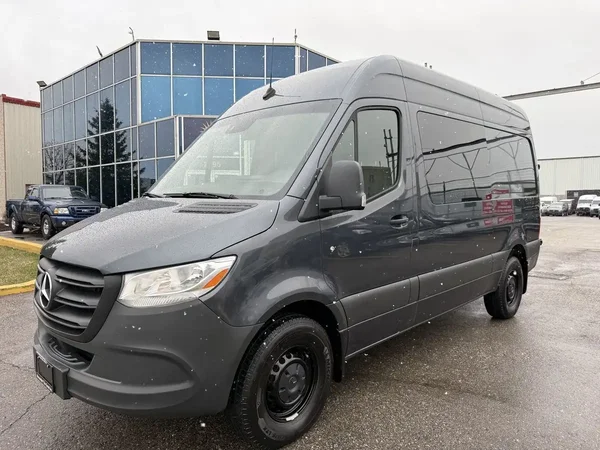
We came very close to buying a 2023 Sprinter. Clean van, right roof height, reasonable price. The thing that stopped us: no AWD option in Canada for that configuration, and the parts and service story outside major cities made us uncomfortable for a van we planned to take into remote areas. Your risk tolerance and use case may differ.
The E-Transit and eSprinter exist — but neither is a realistic conversion platform for Canadian family use right now. Here is why:
Ford E-Transit is cargo-only in North America. No crew configuration, no AWD, and a high-roof range of around 175 km (EPA estimated) in ideal conditions. Cold weather drops that significantly. For a family van that needs legal rear seating and trips outside urban charging infrastructure, it does not work.
Mercedes eSprinter is also cargo-only in the Canadian market. Starting around $107,000 CAD. Range is better (113 kWh battery, up to ~400 km WLTP), but WLTP is a European lab cycle — real Canadian winter range will be materially lower. No crew config, no AWD.
The battery weight also eats payload capacity, and both platforms require you to think hard about charging infrastructure for trips outside major centres. Watch this space — the platforms will catch up — but for a conversion van you plan to drive into the backcountry in January, neither is there yet.
// 02 — Transit Configurations: The Four Decisions
If you go Transit, four variables define what you can build. Get one wrong and you spend the entire build working around it.
// 03 — The Second-Row Bench: Families Read This
This section is for people who need to legally transport children or passengers — not just camp. The rules here matter and vary by jurisdiction. Verify everything with your province or state before making decisions.
The Transit Crew comes with a factory three-passenger bench mounted to factory anchor points. In Canada and the US, legally transporting passengers requires seats properly anchored to manufacturer-approved mounting points. The factory bench satisfies this out of the box.
For our build, keeping the factory bench was a deliberate call:
- We use the van as a daily family driver throughout the build without restriction
- The bench unbolts in under ten minutes — anchor points stay clean for reinstallation
- The cargo area behind the second row is where the build lives — the bench does not eat into it
- If you remove it permanently, you are committing to a two-passenger vehicle legally. Know what you are giving up before you remove it.
Aftermarket Seating Warning
If you plan to add seating beyond the factory config, this is where we would be most cautious. A seat not properly anchored to the vehicle's structural frame is a projectile in a collision. Factory seats are designed around the vehicle's structural geometry and crash-tested. Aftermarket seats need equivalent certification and proper structural mounting — not lumber mounts or repurposed hardware. This is a certified installer conversation, not a forum thread.
Transit Bench Removal
The Transit Crew bench is not a quick-release system — it requires basic hand tools (a socket wrench). On our van it comes out in under ten minutes and the anchor hardware sits clean afterward. Not difficult, but it is worth noting for anyone expecting a flip-and-go setup. The anchor points are designed for reinstallation, so there is no penalty to removing and replacing it repeatedly.
The Sprinter Has Better Bench Engineering
This is worth knowing — particularly if you spent years specifically hunting the Transit for its bench, as we did. The VS30 Sprinter Crew Van (2019 and up) has a tool-free bench removal system. The mounts are recessed into the floor and sit flush when the bench is out, leaving a completely clean load floor. No bolts, no tools, no cleanup.
It goes further than that. The Sprinter bench is modular enough that an upholsterer can convert a three-seat bench into a two-seat configuration and refinish the cover to look factory. If you want legal rear seating but also want a workspace or sleeping platform alongside it, that is a real option on the Sprinter that does not exist on the Transit.
The trade-off: the Sprinter Crew Van is not available with AWD in Canada. If AWD is non-negotiable for your use case, the Transit is still the call. But if you are building for mild Canadian winters or southern use, the Sprinter's bench system is genuinely superior for conversion flexibility.
// 04 — Safety: What the Rules Don't Cover
This is what we thought about during our own build planning. We are not safety engineers, certified installers, or legal experts. These are the questions we asked ourselves — not instructions. Consult qualified professionals before making decisions.
Airbag Zones
Modern vans have more airbag coverage than most builders account for. The Transit has side curtain airbags that deploy from the headliner along the roofline, and side torso airbags built into the front seat backs. Before finalizing any ceiling plan, overhead cabinet layout, or wall treatment, map where those deployment paths run. The factory documentation for your specific van shows the airbag zones. We checked it before finalizing any ceiling or wall plan. Whether you do the same is your call — but it is something we considered before touching anything.
The RV Classification Question
Once a vehicle is classified as a recreational vehicle in many jurisdictions, it exits the passenger vehicle safety framework and enters a much lighter regulatory regime. Some conversion builders pursue this classification deliberately because it loosens requirements around seating, restraints, and other safety systems. We are not going to tell you whether to pursue that or not. What we will say: the reason those requirements exist in passenger vehicles is because they save lives in collisions. Just because the rules do not require something once you are classified as an RV does not mean the physics changed. If you are putting your family in the vehicle, that is worth sitting with.
// 05 — What to Check Before You Buy
This is not a comprehensive checklist — that is what you pay a mechanic for. These are the things we looked at on every van we considered:
- Rust on the undercarriage, wheel wells, and rear floor — especially on Canadian vehicles with road salt exposure
- Roof seams and any existing roof penetrations — vent holes, aerial mounts, previous installs
- Cargo floor condition — stains, moisture, evidence of prior conversion work
- Rear door seals — water intrusion through barn doors is common on high-mileage vans
- Transmission behaviour on a test drive — hesitation, slipping, or rough shifts
- If EcoBoost: inspect turbo carefully. Boost lag, unusual noise under load, and intercooler connections are known problem areas. This is one reason we recommend the base V6 instead.
- All factory seats and anchor hardware on crew vans — verify nothing has been modified or removed and reinstalled
- Any signs of prior conversion work reversed — patch welds, filled holes, repainted floor sections
// 06 — Year and Mileage
Current-generation Transit (2015+) is what you want. On engine: skip the EcoBoost. The base 3.5L Ti-VCT V6 is the right call for a conversion van. The EcoBoost adds turbo complexity, higher maintenance costs, and repair bills that do not justify the power bump for a vehicle you plan to live out of and keep for years.
We bought the EcoBoost. If we did it again, we would not. The base V6 makes enough power for a loaded van, costs less to maintain, and has fewer components that can fail far from a shop. The EcoBoost is a worthwhile upgrade for a work truck doing highway pulls. For a conversion van you are building out and keeping for a decade, it is an unnecessary cost. Save the money, put it into the build.
- Engine: Base 3.5L Ti-VCT V6. Reliable, simple, wide parts availability across Canada. Skip the EcoBoost unless you specifically need the power for heavy towing and have budget for turbo maintenance.
- 2015–2019: Solid generation. Check service history carefully. EcoBoost units in this range have documented turbo and injector wear at higher mileage.
- 2020+: Updated SYNC infotainment, revised AWD system. Noticeably smoother in our experience.
- 2022 was the last year Ford built AWD Crew in Canada in meaningful numbers. If this is your spec, you are hunting used 2022 and earlier stock only.
- Avoid salvage or rebuilt title unless a trusted mechanic inspects it fully. Conversion vans take hard use. Know exactly what you are buying.
On mileage: a well-maintained Transit at 150,000 km is not automatically a problem. A neglected one at 60,000 km can be. Service history matters more than the odometer. Budget for a professional pre-purchase inspection regardless of what the seller tells you.
// 07 — AWD vs Winter Tires: The Answer Might Surprise You
We are not tire engineers. This is our own research and what we considered when speccing our van for winters where we live. Verify with a qualified source before deciding.
This is one of the most consistently misunderstood topics in Canadian vehicle ownership.
// 08 — Where to Find Them in Canada
The honest answer: it takes time, especially for AWD crew. These are not common vehicles. Here is where we looked — and what actually worked:
- Kijiji: Highest volume of used van listings in Canada. Set daily alerts. The right van moves fast — we lost two vans within hours of them listing.
- AutoTrader: Better search filters, more dealer stock, fewer private sellers. Good for establishing fair market price before you negotiate.
- Facebook Marketplace: Hit or miss — we found leads here that had not appeared on Kijiji yet. Worth checking daily if you are serious.
- Ford fleet and dealer trade-ins: Some dealerships carry trade-ins from commercial fleets. Rental returns are another source — inspect carefully for accumulated hard use.
- Cross-province: We nearly drove to Manitoba. Be willing to travel for the right spec — the van does not know which province it is in.
- Before you drive to see any van: Pull a CARFAX Canada report first. Accident history, odometer statements, registration flags — a $50 report has saved more than one buyer from a $10,000 mistake.
// 09 — FAQ
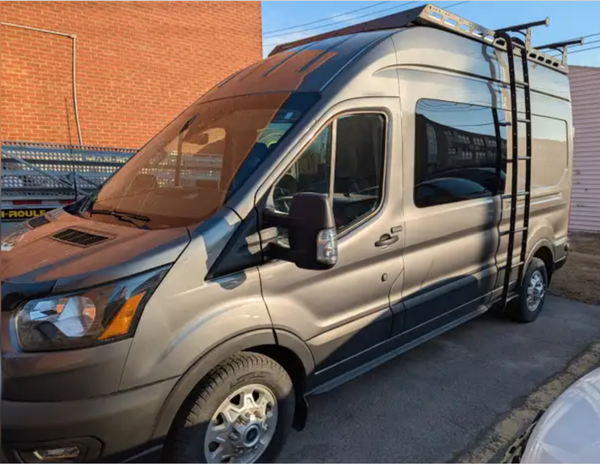
2022 Ford Transit T250 · AWD · High Roof · Long Body · Crew · 3.5L EcoBoost · Magnetic Metallic
We got the EcoBoost. If we did it over, we would spec the base V6. See Section 06 for why.
Three years of searching. One van. If you want the full story behind the search, read it here.